
By Grace
READ
Picture receiving a gift so large it makes no sense to say thank you and then immediately reach for your wallet. That's the awkward, almost comic mismatch Paul is trying to prevent in these next few verses. He's just described how God made us alive out of spiritual death — an entirely undeserved rescue. Now he makes sure no one mistakes that gift for something they helped pay for.
Read Ephesians 2:8–10 and notice both what Paul rules out and what he points toward instead.
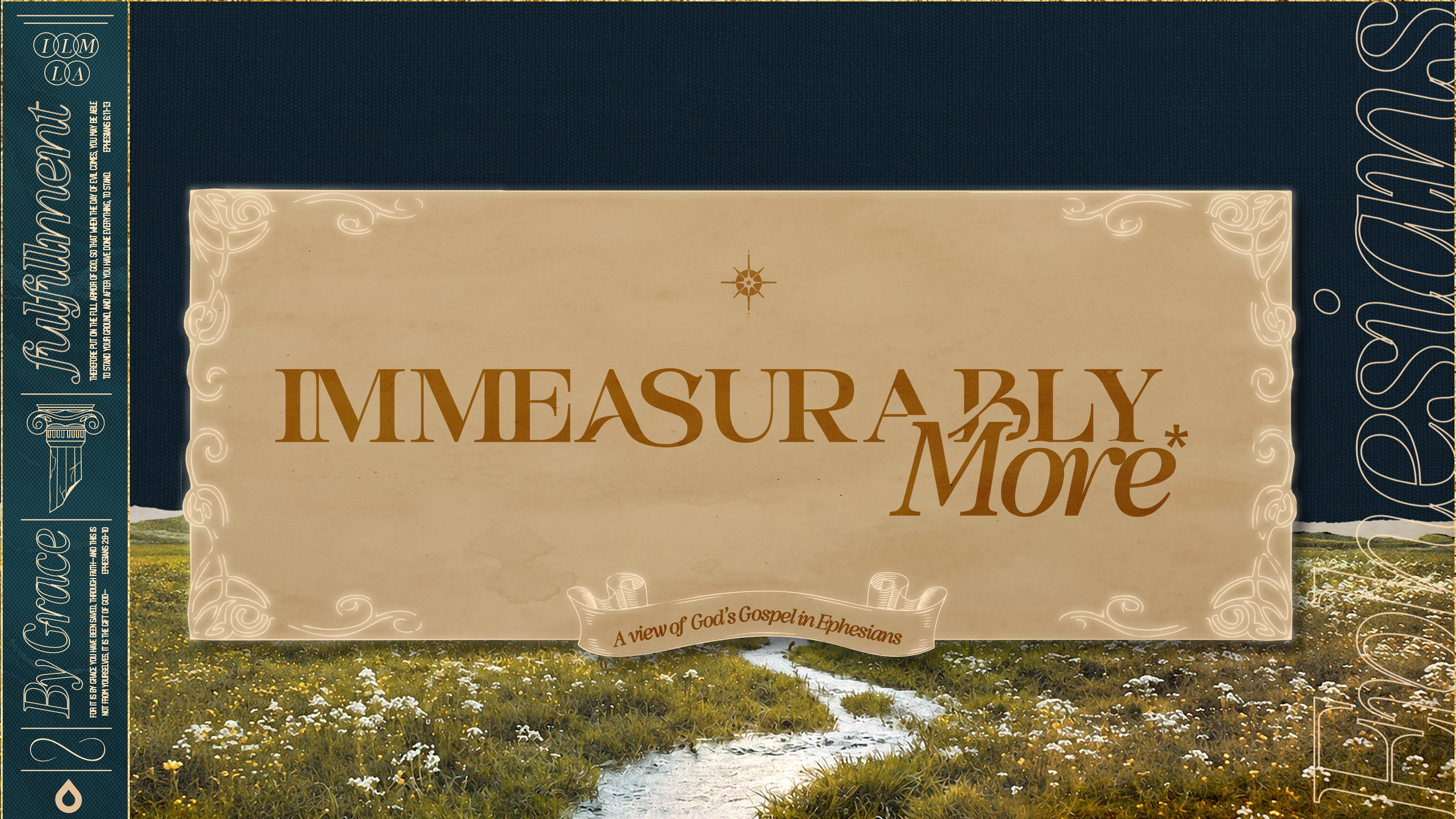
8 For it is by grace you have been saved, through faith—and this is not from yourselves, it is the gift of God— 9 not by works, so that no one can boast. 10 For we are God’s handiwork, created in Christ Jesus to do good works, which God prepared in advance for us to do.
REFLECT
"For it is by grace you have been saved, through faith — and this is not from yourselves, it is the gift of God." Three times in one sentence Paul makes sure this lands: grace, not works. Gift, not achievement. Not from yourselves — as if he can already hear someone quietly trying to take partial credit and wants to close that door before it opens. "Not by works, so that no one can boast."
This matters because boasting is a strangely persistent instinct, even in spiritual life. We may not say it out loud, but it shows up in comparison — measuring our discipline against someone else's, feeling a quiet sense of earned standing when we've had a good week of devotion, feeling secretly ashamed when we haven't. All of that assumes salvation is at least partly a performance we're being scored on. Paul eliminates the scoreboard entirely. If it's a gift, there's nothing to compare, nothing to rank, nothing to boast about. You can't out-earn someone at receiving something you didn't pay for in the first place.
But here's where the passage does something easy to miss if you stop reading after verse 9, which is where most people quote it and quietly move on. Paul isn't finished. "For we are God's handiwork, created in Christ Jesus to do good works, which God prepared in advance for us to do." Grace isn't the end of the sentence. It's the beginning of a new one.
"Handiwork" is a rich word — it's the same root behind our word "poem," something crafted with intention, not assembled by accident. You are not an afterthought God is managing. You are something made, deliberately, for a purpose. And that purpose isn't vague. Paul says God "prepared in advance" good works for you to do — meaning your life wasn't just rescued from something, it was aimed toward something, before you ever took a single step in that direction.
This is the piece that keeps grace from becoming passive. It would be easy to hear "not by works" and conclude that what you do afterward doesn't matter much — that grace is the whole story and your life is just along for the ride. Paul says the opposite. Grace isn't the absence of a purposeful life. It's the foundation that makes a purposeful life possible without turning it into a performance. You're not working to become loved. You're working because you already are, and that love is now producing something real through you.
This is what it looks like when grace actually shapes daily life rather than staying a doctrine you agree with. Not earning your standing through your good works, and not ignoring your good works because your standing is already secure — but living out of the security first, letting it move naturally into the good, ordinary, prepared-in-advance work sitting in front of you today.
RESPOND
Take a moment to process what God might be leading you to do in light of what you read.
Where do you catch yourself quietly trying to earn what Paul says is already a free gift?
Paul says good works were "prepared in advance" for you specifically. Is there a good work in front of you right now that you've been hesitant to step into?
How would your effort today feel different if it came from security rather than from trying to prove or earn something?
REST
Take a moment to rest in God’s presence and consider one thing you can take away from your time reading, then close your devotional experience by praying:
Lord, thank You for the gift of grace — freely given, not something we could ever earn or deserve. Forgive us for the quiet ways we still try to take credit, compare ourselves to others, or measure our worth by performance. Remind us that we are Your handiwork, made on purpose, for a purpose. Help us walk today into the good works You've already prepared for us, not to earn Your love, but because we already have it. Let grace shape how we live, not just what we believe. Amen.