
Draw Near
READ
To feel the weight of today’s passage, it helps to know what the Most Holy Place was. In the Jewish temple, it was the innermost room — the place where God's presence was believed to dwell. A thick curtain separated it from everything else. Only the high priest could enter, and only once a year, on the Day of Atonement, carrying blood to make atonement for the sins of the people. Everyone else? You kept your distance. You did not just walk in.
That curtain tore in two the moment Jesus died. And the writer of Hebrews wants to make sure you understand what that means for you, right now, today.
Take a moment to read Hebrews 10:19-22:
"Therefore, brothers and sisters, since we have confidence to enter the Most Holy Place by the blood of Jesus, by a new and living way opened for us through the curtain, that is, his body, and since we have a great priest over the house of God, let us draw near to God with a sincere heart and with the full assurance that faith brings, having our hearts sprinkled to cleanse us from a guilty conscience and having our bodies washed with pure water."
REFLECT
I want to be honest with you about something, because I think a lot of us carry this quietly and never say it out loud.
There are days when approaching God feels less like walking toward a Father and more like sneaking into a room you're not sure you're allowed to be in. You've been distant. You've been inconsistent. You did the thing you said you were done doing, and now you're not sure what kind of reception you'd get if you actually showed up. So you hover. You keep the prayers surface-level. You go through the motions on Sunday while privately feeling like there's a version of you that doesn't quite belong here.
If that resonates at all, Hebrews 10 is written for you.
The word translated "confidence" here is the Greek word parresia — and it's a rich word. It means boldness, frankness, the freedom to speak openly without fear of rejection. It was used to describe the kind of speech a free citizen could offer in a public assembly, the access a close friend had to say what others couldn't. It's the opposite of tiptoeing. It's the opposite of hovering at the door wondering if you're allowed in.
And the writer of Hebrews says that's exactly what you have. Not because of your track record. Not because you've been consistent enough or faithful enough or cleaned yourself up enough to deserve it. You have this confidence because of the blood of Jesus — because of what He did, not what you've done. The way into God's presence was opened by Him, and it stays open because of Him.
Here's where confession becomes something completely different than we often make it. So much of what passes for confession is really a form of scapegoating — loading our guilt onto rituals, onto feelings of remorse, onto the sheer intensity of how bad we feel, as if the depth of our sorrow is what earns us back into God's good graces. We treat our own guilt like a currency. Feel enough of it, and maybe the debt clears.
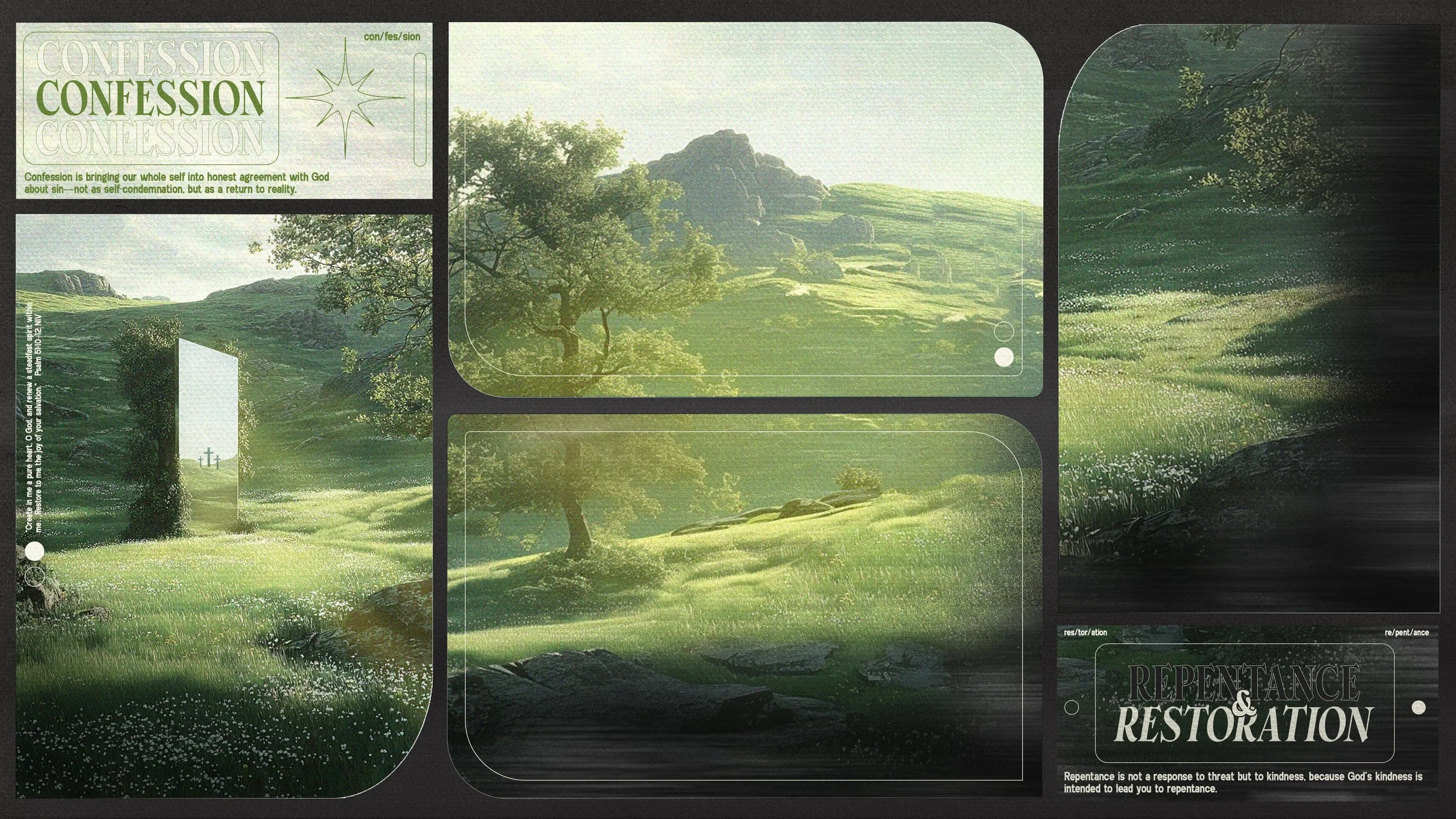
But Hebrews says the cleansing has already happened. Your conscience has been sprinkled clean — past tense, accomplished, done. Confession isn't the payment. It's the response of someone who has already received grace and is choosing to live in the reality of it rather than the fiction of their guilt.
"Draw near," the writer says. Not "earn your way back." Not "wait until you feel worthy." Draw near — with a sincere heart and the full assurance that faith brings. Sincerity, not perfection. Assurance, not anxiety. The door is open. You don't have to sneak in. You were invited.
RESPOND
Take a moment to process what God might be leading you to do in light of what you read.
Do you tend to approach God with confidence or with a sense that you need to earn your way back first? What does your honest answer reveal about what you actually believe the cross accomplished?
Where in your life have you been treating guilt like a currency — as if feeling bad enough is what restores your standing with God? How does Hebrews 10 reframe that?
What would it look like to "draw near" to God today — not after you've gotten yourself together, but right now, with a sincere heart and the full assurance that faith brings?
REST
Take a moment to rest in God’s presence and consider one thing you can take away from your time reading, then close your devotional experience by praying:
Lord, I confess that I've been hovering when You've been inviting me in. I've treated my guilt like something I have to work off before I can come close — but You've already done the work. The curtain is torn. The way is open. Today I draw near — not because I've earned it, but because You made it possible. Thank You that I don't have to sneak in. Amen.