



Enter That Rest
As we close this journey through rest and Sabbath, we turn our eyes toward the horizon of eternity. The writer of Hebrews reminds us that all our earthly experiences of rest—however sweet and restorative—are but foretastes of something far greater. There is a rest that transcends weekly rhythms, a rest that surpasses temporary relief, a rest that will never end.
Be Still
In a world that never stops, the idea of being still can feel almost revolutionary. Our phones buzz with notifications, our calendars overflow with commitments, our minds race with endless to-do lists. We've become so accustomed to constant motion that stillness feels uncomfortable, even guilty. But right here in the middle of Scripture, God gives us a different invitation: Be still.
Find Rest
There's something tender about today’s invitation. It's different from a command or a demand. An invitation assumes choice, extends welcome, and creates space for relationship. And here, in one of the most beloved passages in Scripture, Jesus offers us the most beautiful invitation of all.
He Rested
There's something profoundly beautiful about rhythm. Your heart beats in rhythm. The seasons change in rhythm. The tides ebb and flow in rhythm. And right here at the beginning of Scripture, we discover that God built rhythm into the very foundation of existence—a rhythm of work and rest, of creating and celebrating, of doing and being.
Made for Man
Take a moment to breathe deeply, friend. Right now, wherever you are, you have permission to pause. The world will not stop spinning if you step away from the endless cycle of doing, achieving, and producing. Today, we're going to explore one of the most radical concepts in our achievement-obsessed culture: the gift of enough.
Sabbath Rest: A Story Woven Through Scripture
Welcome to this Sabbath Sunday, friend. As you settle into this day of rest, take a deep breath. Notice the quiet. Feel the permission to simply be rather than do. Today, we're not gathering in our usual ways, but we're still together in spirit, practicing one of the most countercultural acts of faith: choosing rest.

Standing in the Gap
Daniel was now an old man, probably in his eighties, still serving faithfully in a foreign land. While reading the prophet Jeremiah, he discovered that God had promised to restore Israel after seventy years of captivity. Suddenly, Daniel realized that the time was almost up – God was about to move, and Daniel wanted to be part of it.
The Lions Den
Daniel was now in his eighties, a seasoned statesman who had served multiple kings with distinction. His integrity and wisdom had made him so valuable that King Darius planned to set him over the entire kingdom. But success has a way of making enemies, and Daniel's promotion stirred up jealousy among the other officials.
Even If He Doesn’t
In an attempt to unify his people together with the foreign captives who’d recently come under his rule, King Nebuchadnezzar made a shrewd political decision. He demanded that everyone in Babylon—regardless of their past religious or national identity—bow before a golden statue whenever his musical ensemble began to play. Nebuchadnezzar knew that dictating who the people worshiped meant he’d control their hearts and affections.
Declaring
Imagine getting a death sentence because you couldn't interpret someone else's dream – a dream they refused to even tell you! That's exactly where Daniel found himself when King Nebuchadnezzar had his mysterious dream. The king demanded that his wise men not only interpret the dream but also tell him what he dreamed in the first place. When they couldn't, he ordered the execution of all the wise men in Babylon, including Daniel.
The Voice of Compromise
There's a place inside each of us where compromise whispers. It may be subtle. Sometimes it's obvious. Or, we've become an expert at concealing and containing it. The voice says things like, "Just this once won't hurt," or "Everyone else is doing it," or "You've got to survive somehow." When these thoughts creep to the surface, we turn the volume up on justification. Daniel heard that voice too.
The Lord Restored
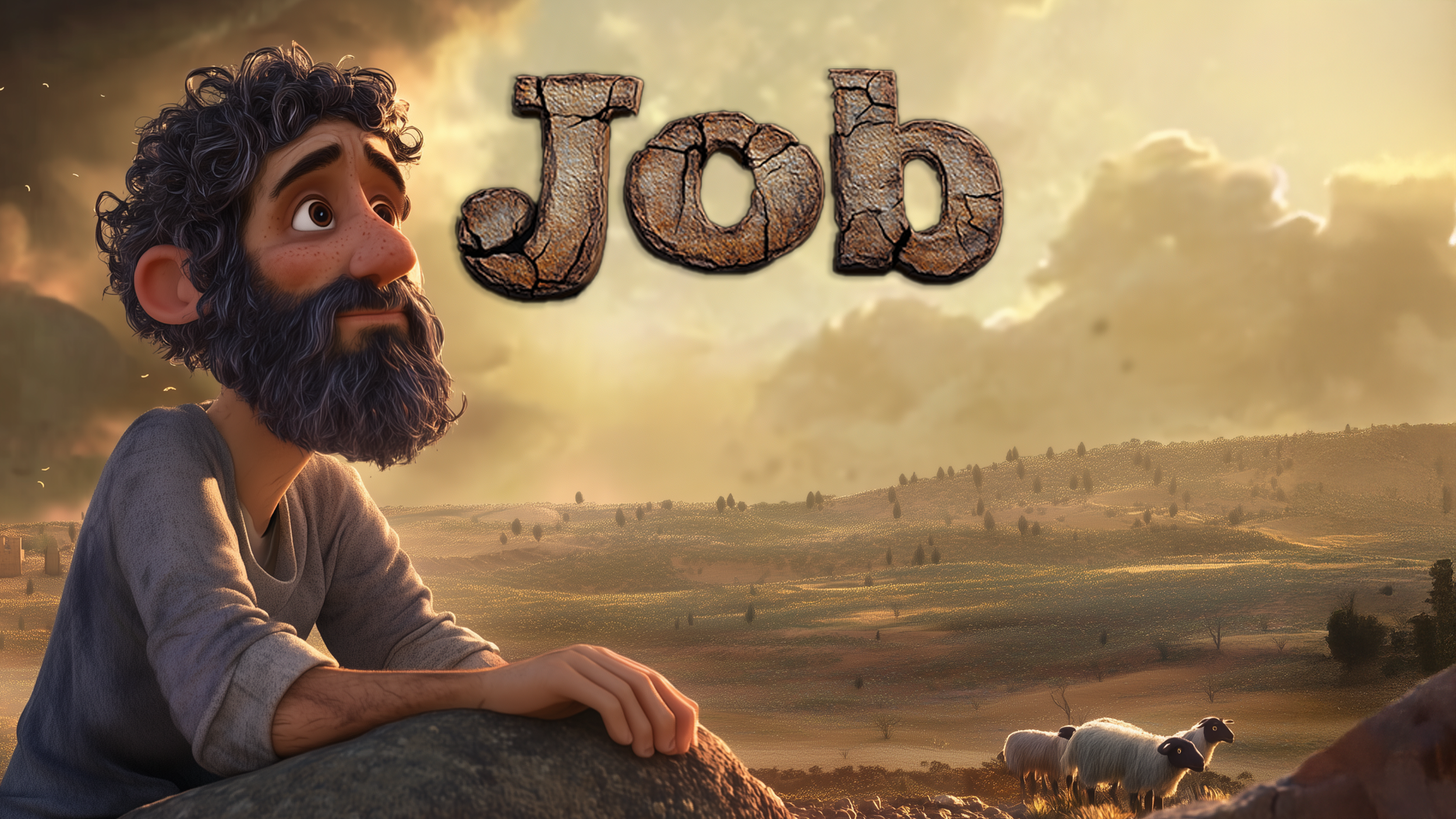
The end of Job's story reads like a fairy tale. After chapters of suffering, questioning, and wrestling with God, everything is suddenly restored. Job receives twice as much as he had before - more livestock, more wealth, more children. It's the kind of ending that makes us want to believe that if we just have enough faith, our stories will end the same way. But that misses the deeper truth of what God is revealing about His character and His ways.
Sovereignty Over Suffering
Job, God’s loyal servant and friend, had everything stripped from him: his family, his possessions, and his health. Under the heavy weight of grief and loss, Job felt hopeless, alone, and angry. In his desperation, he did what only the most faithful among us dare to do: he wrestled with God. He brought his questions and unfiltered emotions before the Lord, confident that he would not be turned away. Job’s life serves as a powerful testimony that doubt is a genuine expression of faith.
My Redeemer Lives
In the middle of Job's darkest hour, when hope seems impossible and faith feels foolish, he makes a declaration that echoes through eternity. These words have been spoken at countless funerals, inscribed on countless tombstones, and sung in countless hymns. But we often miss the context: Job speaks these words not from a place of victory, but from the depths of despair.
Yet Will I Hope
There's a raw honesty in today’s passage that takes your breath away. He's not speaking from a place of comfort or certainty. His body is covered in painful sores, his friends have turned into accusers, and his world has crumbled around him. Yet from this place of absolute desperation, Job makes one of the most profound declarations of faith in all of Scripture.
The Lord Takes Away
Imagine that you wake up one morning to discover your entire life has been turned upside down. Your business has collapsed, your health is failing, and tragedy has struck your family. What would be your first words? Your first thoughts? Most of us would probably cry out in anger, confusion, or despair. But Job's response reveals something extraordinary about his character and his understanding of God.

Stirred by Grace
In His grace, God used David’s lineage to establish Christ’s eternal Kingdom (2 Samuel 7:16). Despite this position of honor, David was not altogether righteous—he was an imperfect forerunner for the promised Savior King. David’s life was filled with chaos, apostasy, and the disastrous consequences of his selfish decisions. Ultimately, his sin would be redeemed, and God’s good purposes would prevail. But in the meantime, David had to confront the relational and spiritual costs of his moral failure.
Establish a House
David had finally settled into his palace, watching Jerusalem prosper under his reign. Looking at his beautiful cedar home, then at the tent housing the Ark of God, David felt uncomfortable. "I live in luxury while God's presence dwells in a tent," he mused. His desire to build God a temple seemed noble and logical. But God had different plans. Through the prophet Nathan, God delivered a message that would echo through eternity.
My Shepherd
The most beloved psalm in Scripture flows from the pen of someone who actually smelled like sheep. David's words aren't poetic theory—they're lived experience. He knew what it meant to lead sheep to green pastures, to guide them beside still waters, and to protect them from predators with rod and staff.
Sling & Stone
Goliath stood nine feet tall, covered in 125 pounds of bronze armor, carrying a spear with a 15-pound iron point. His daily taunts echoed across the Valley of Elah for forty days while Israel's army trembled in their tents. Then a teenager with a slingshot showed up and changed everything.