
Friendship with Jesus
READ
We've become experts at religious activity while remaining strangers to relational intimacy. We know how to attend services, complete Bible reading plans, participate in a small group, serve on Sundays, and maintain the appearance of spiritual health. We've mastered the language of faith, the rhythms of church life, the performance of devotion. But somewhere along the way, many of us have lost something essential: we've forgotten that Christianity is first and foremost about friendship with Jesus.
Not friendship in the casual, superficial sense we often mean today. But friendship in the profound, transformative sense—the kind of relationship where you're known deeply, loved completely, and changed fundamentally. The kind of friendship where presence shapes you more than principles, where love transforms you more than rules, where intimacy with someone leads you to become more like them.
This is the kind of friendship Jesus describes on the night before His death, and it changes everything about how we understand spiritual formation.
Let’s take a moment to read John 15:9-17:
“As the Father has loved me, so have I loved you. Now remain in my love. If you keep my commands, you will remain in my love, just as I have kept my Father’s commands and remain in his love. I have told you this so that my joy may be in you and that your joy may be complete. My command is this: Love each other as I have loved you. Greater love has no one than this: to lay down one’s life for one’s friends. You are my friends if you do what I command. I no longer call you servants, because a servant does not know his master’s business. Instead, I have called you friends, for everything that I learned from my Father, I have made known to you. You did not choose me, but I chose you and appointed you so that you might go and bear fruit—fruit that will last—and so that whatever you ask in my name the Father will give you. This is my command: Love each other.”
REFLECT
Jesus—the Word made flesh, the Creator of the universe, God incarnate—looks at this ragtag group of followers and says: friends. Not subjects. Not employees. Not even devoted servants. Friends.
And then He defines what He means by friendship: "I have made known to you everything I learned from my Father." This is the heart of friendship—knowing and being known. Intimacy. Disclosure. The sharing of what's most true and most precious. Jesus doesn't just give commands from a distance; He invites His followers into His inner life, into the relationship He has with the Father. This matters because we cannot be transformed by someone we don't truly know. And we cannot truly know ourselves apart from knowing God.
Think about how transformation actually happens in human relationships. You don't change because someone gives you a list of rules. You change because you spend time with someone you love, someone whose presence shapes you, whose perspective changes how you see things, whose love makes you want to become more like them. Transformation is always relational.
This is why Jesus doesn't leave His disciples with a manual—He leaves them with Himself. Through the Holy Spirit, He promises to remain present, to continue the friendship, to keep forming them through relationship rather than regulation. The Christian life isn't about following a dead teacher's rules; it's about friendship with a living Savior whose love re-makes us.
But here's where we struggle: we've turned Christianity into performance rather than relationship. We've made it about what we do for God instead of who we're becoming with God. We measure our spiritual lives by how well we're keeping the rules rather than how deeply we're experiencing the relationship. We've become servants trying to earn approval instead of friends learning to abide in love.
Jesus says, "As the Father has loved me, so have I loved you. Now remain in my love." The word "remain" (or "abide" in some translations) suggests more than just staying connected—it means making your home there, dwelling in that love, letting it be the atmosphere you breathe. Formation happens not through trying harder but through remaining longer in the love that transforms.
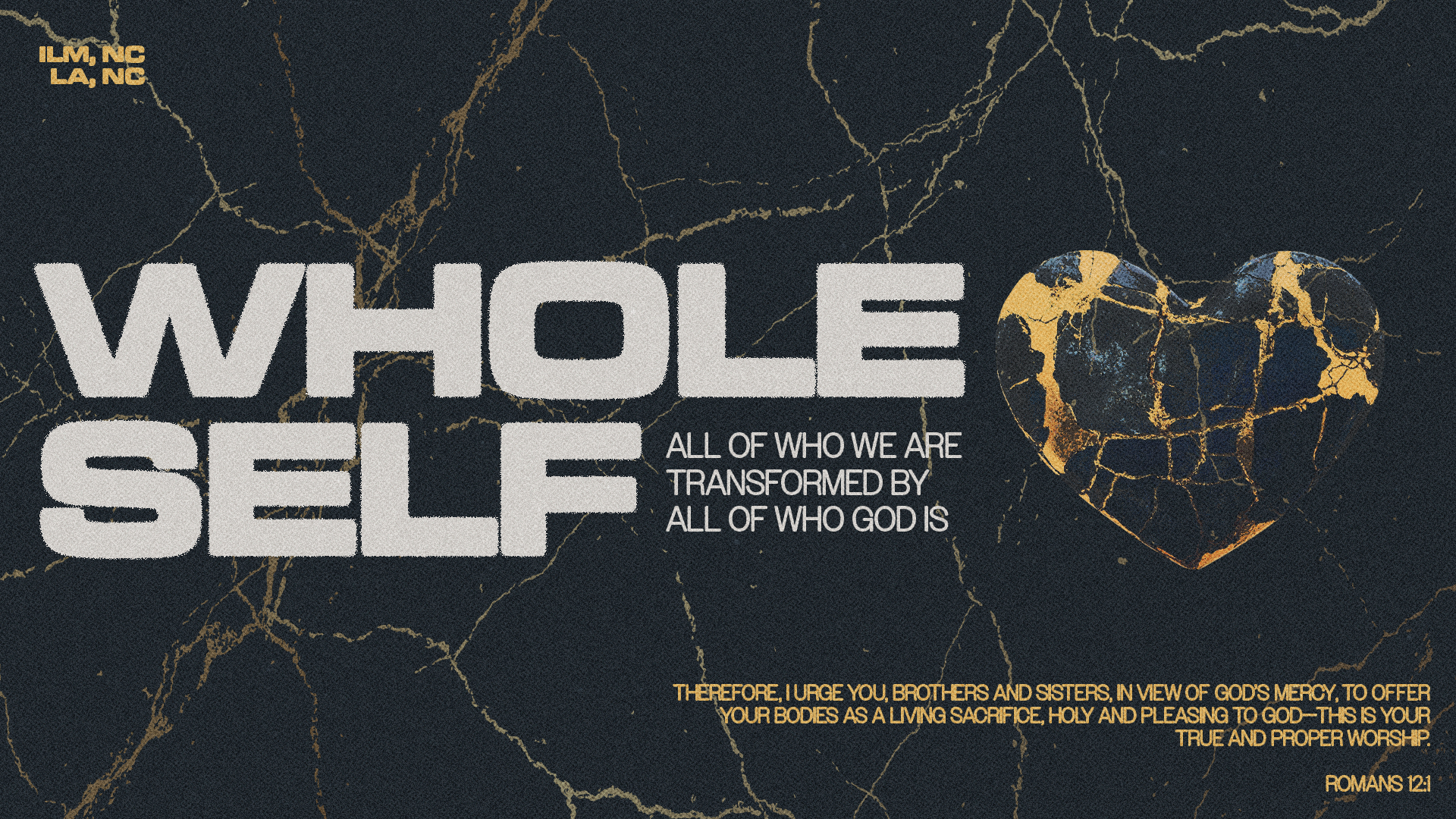
This is the context for understanding what Paul writes in Romans 6: we offer our whole selves to God as "instruments of righteousness." Not partial selves. Not the acceptable parts while we hide the struggling parts. Our whole selves. And when we do, something happens that we could never accomplish through religious performance—we're freed from sin's power not through willpower but through belonging to Someone whose love is stronger than our shame.
The opposite, Paul warns, is offering parts of ourselves to sin—and that fragments us. When we withhold areas from God's transforming love, when we compartmentalize our lives into "spiritual" and "secular," when we perform righteousness in public while nursing sin in private, we become divided. Double-minded. Unstable in all our ways.
But friendship with Jesus heals that fracture. Not because we're performing well, but because we're known well. Not because we've hidden our struggles, but because we've brought them into the light of His love. Jesus doesn't say, "Clean yourself up and then we'll be friends." He says, "You are my friends," present tense, unconditional, transformative.
I think about how this plays out practically. When I'm treating my relationship with Jesus like a transaction—reading my Bible to check a box, praying to fulfill a duty, serving to earn approval—I remain unchanged. But when I approach Him as a friend, when I bring my honest doubts and real struggles, when I let Him make known to me what the Father is doing, something shifts. The relationship itself becomes formative.
Friends don't just exchange favors; they shape each other. Friends don't just follow rules together; they share life together. Friends don't keep score; they keep showing up. And Jesus, the friend who laid down His life for us, keeps showing up—not to grade our performance but to continue the transforming work of love.
This is what Paul means when he says God sanctifies us "through and through." It's not a program you complete; it's a friendship you live in. It's not a moral code you master; it's a love that masters you. It's not about trying to be good enough for God; it's about letting God's goodness be enough for you.
You cannot truly know yourself apart from knowing God. Your identity doesn't come from what you accomplish or how well you perform. It comes from being known and loved by the One who made you. And in that friendship—in that daily, intimate, transforming relationship—you become who you were always meant to be.
Not through striving. Through abiding. Not through performance. Through friendship. Not through rules. Through love. Jesus calls you friend. And that friendship, more than any religious activity you could perform, is what will re-make you into His likeness.
RESPOND
Take a moment to process what God might be leading you to do in light of what you read.
In what ways have you been treating your relationship with Jesus more like a servant following rules than a friend sharing life? What would need to change for you to experience true friendship with Him?
How does knowing you "cannot truly know yourself apart from knowing God" change your approach to self-discovery, identity, and purpose?
REST
Take a moment to rest in God’s presence and consider one thing you can take away from your time reading, then close your devotional experience by praying:
Jesus, thank You for calling me friend. Forgive me for the times I've treated our relationship like a transaction rather than a transformation. I want to remain in Your love, to be shaped by friendship with You rather than exhausted by performance for You. Teach me to offer my whole self—nothing hidden, nothing withheld—and trust that Your love is what will remake me. Amen.