
The Whole Self Offered
READ
There's a peculiar form of spirituality that many of us practice without realizing it: the spirituality of compartments. We divide our lives into separate categories—spiritual and secular, sacred and ordinary, acceptable and shameful—and we offer God access to some while keeping others locked away. We pray about our church involvement but not our work ambitions. We confess our "respectable" sins but hide our real struggles. We bring God our Sunday selves while withholding our Monday through Saturday reality.
This compartmentalized life feels safer. It lets us maintain control over certain areas while appearing spiritual in others. It allows us to engage with God without the vulnerability of full surrender. But it also leaves us profoundly fragmented—divided within ourselves, exhausted from managing multiple versions of who we are, and ultimately unchanged by the very faith we profess.
Paul addresses this fragmentation head-on in his letter to the Romans, and what he says challenges everything about how we approach spiritual formation.
Let’s take a moment to read Romans 6:6–14:
For we know that our old self was crucified with him so that the body ruled by sin might be done away with, that we should no longer be slaves to sin—because anyone who has died has been set free from sin.
Now if we died with Christ, we believe that we will also live with him. For we know that since Christ was raised from the dead, he cannot die again; death no longer has mastery over him. The death he died, he died to sin once for all; but the life he lives, he lives to God.
In the same way, count yourselves dead to sin but alive to God in Christ Jesus. Therefore do not let sin reign in your mortal body so that you obey its evil desires. Do not offer any part of yourself to sin as an instrument of wickedness, but rather offer yourselves to God as those who have been brought from death to life; and offer every part of yourself to him as an instrument of righteousness. For sin shall no longer be your master, because you are not under the law, but under grace.
REFLECT
Paul writes to the Romans with striking physicality: "Do not offer any part of yourself to sin as an instrument of wickedness, but rather offer yourselves to God as those who have been brought from death to life; and offer every part of yourself to him as an instrument of his righteousness."
Notice the language: offer. Not "force yourself to be better." Not "try harder to stop sinning." Not "perform righteousness until God is pleased." Offer. It's the language of relationship, not religion. The language of gift, not transaction. The language of worship, not willpower.
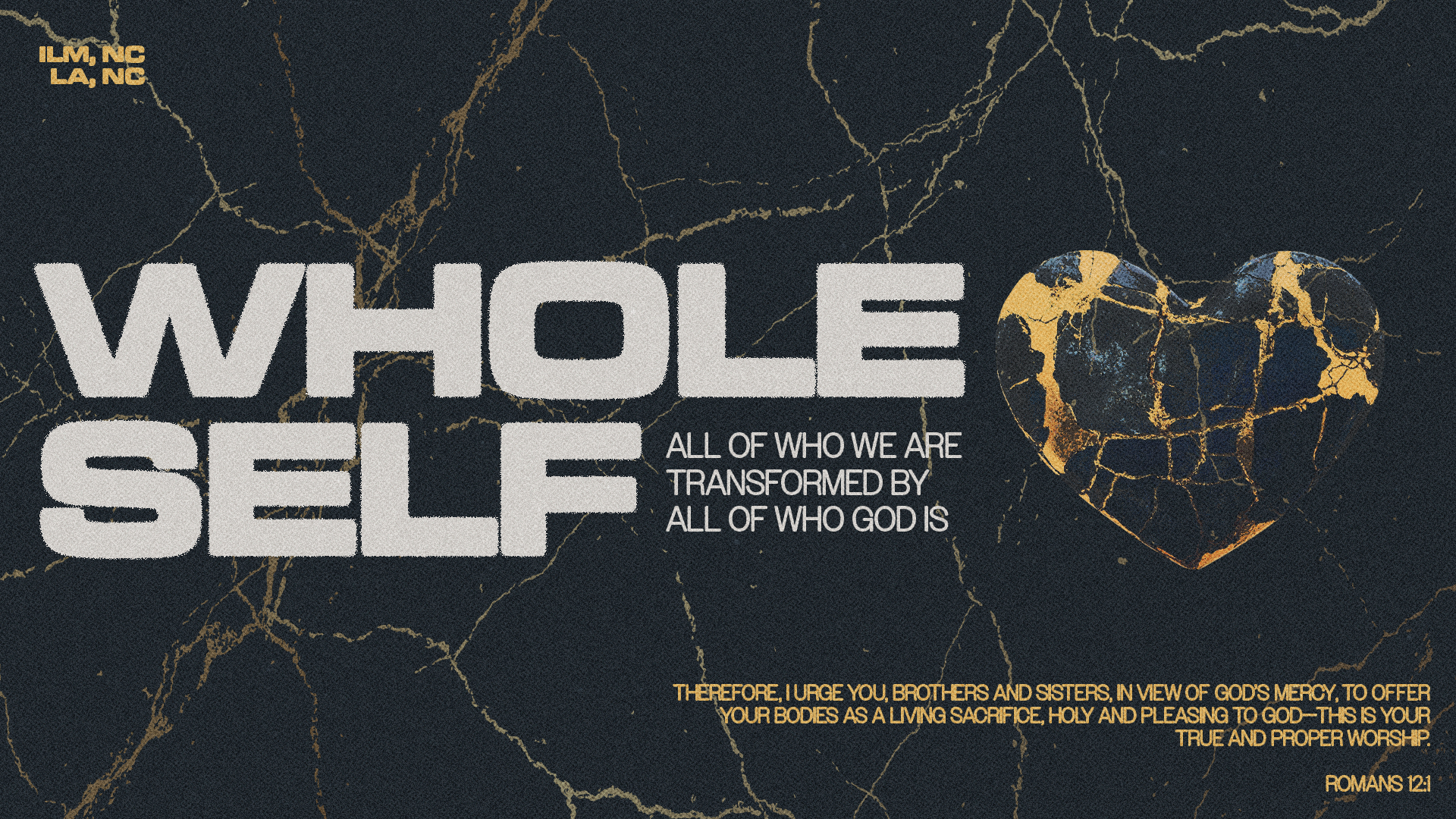
And notice what we're offering: ourselves. Our whole selves. Every part. Not just our spiritual activities or religious moments. Not just the parts we're proud of or the areas where we're succeeding. Every part—our bodies, our desires, our struggles, our strengths, our work, our rest, our public lives, our private thoughts. All of it.
This matters because the opposite—offering parts of ourselves to sin while offering other parts to God—is exactly what fragments us. It's the divided life. The double-minded existence. The exhausting work of managing multiple versions of ourselves. And Paul says clearly: that life leads to death. Not just spiritual death eventually, but the death of wholeness now. The death of integration. The death of peace.
But here's what we miss: offering ourselves to God isn't another form of religious performance. It's not about trying really hard to be holy. It's about understanding that we've already been "brought from death to life." The transformation has already begun. We're offering ourselves to God not to earn His love but from within His love. Not to become His children but because we already are.
Paul says we've been "set free from sin" and have "become slaves to righteousness." The language sounds restrictive—slavery?—until you realize what he's actually describing: freedom. Real freedom. Not the so-called freedom of doing whatever you want (which actually enslaves you to your worst impulses), but the freedom of becoming who you were made to be.
Think about a musician learning an instrument. At first, the rules feel restrictive—finger placement, scales, rhythms, theory. But as you practice, as you offer yourself to the discipline, something happens: the rules become freedom. You're not thinking about finger placement anymore; you're making music. The instrument becomes an extension of yourself. You're free to create. This is what Paul means by becoming an "instrument of righteousness." Not a tool God uses while you grit your teeth and endure. An instrument—something that, offered wholly to its purpose, produces something beautiful. Something that, when offered partially or grudgingly, produces only discord.
The Christian life is not transactional—it's transformational. God isn't waiting for you to offer Him the right combination of good behavior so He'll finally accept you. He's already accepted you. He's already brought you from death to life. Now He's inviting you into the ongoing work of transformation: offering your whole self—spirit, soul, and body—as an instrument in His hands. But we struggle with wholeness, don't we? We're so used to fragmenting ourselves. We offer God our Sunday mornings but withhold our Monday work lives. We offer our service but withhold our doubts. We offer our successes but hide our struggles. We offer the parts we're proud of but keep the shameful parts locked away. And in that withholding, in that fragmentation, we remain bound to the very sin we're trying to escape.
Paul's argument is both theological and practical: you've died to sin through Christ. You've been raised to new life. The old self—the fragmented, enslaved, divided self—has been crucified with Christ. So why are you still offering parts of yourself back to the thing that killed you? Why are you still fragmenting yourself when wholeness is available?
God's work is to sanctify you "through and through," as Paul writes to the Thessalonians. Spirit, soul, and body. Not just your religious life. Not just your moral choices. Everything. Your work, your relationships, your body, your desires, your ambitions, your wounds, your joys. Every part offered to God becomes an instrument that produces righteousness—not through your effort alone, but through His transforming power working in your willing surrender. This is formation by love, not rules. Rules tell you what to do. Love changes who you are. Rules manage behavior externally. Love transforms desire internally. Rules fragment you into parts that comply and parts that resist. Love integrates you into a whole person increasingly freed to become who you were made to be.
The invitation today is simple but costly: offer yourself. Your whole self. Not the edited version. Not the parts you think are acceptable. All of you. The struggling and the strong. The doubtful and the faithful. The broken and the healing. Every part. Because God isn't interested in your performance. He's interested in your transformation. And transformation happens when you stop withholding and start offering. When you stop fragmenting and start integrating. When you stop trying to be an instrument of your own righteousness and let yourself become an instrument of His.
You've been brought from death to life. The work has begun. And the God who started it is faithful to complete it—not through your willpower, but through your willing offering of every part of yourself to His transforming, integrating, sanctifying love.
RESPOND
Take a moment to process what God might be leading you to do in light of what you read.
What parts of yourself are you currently offering to sin (habits, thought patterns, desires) while withholding them from God? How is this fragmentation affecting your sense of wholeness?
How does understanding that you've already been "brought from death to life" change your motivation for offering yourself to God? How is this different from trying to earn His approval?
REST
Take a moment to rest in God’s presence and consider one thing you can take away from your time reading, then close your devotional experience by praying:
Father, I've been fragmenting myself, offering parts to You while withholding parts from You. Today I choose wholeness. I offer my whole self—every part, nothing hidden—as an instrument in Your hands. Thank You that this isn't about earning Your love but about being transformed by it. Sanctify me through and through. Make me whole. Make me Yours. Amen.