


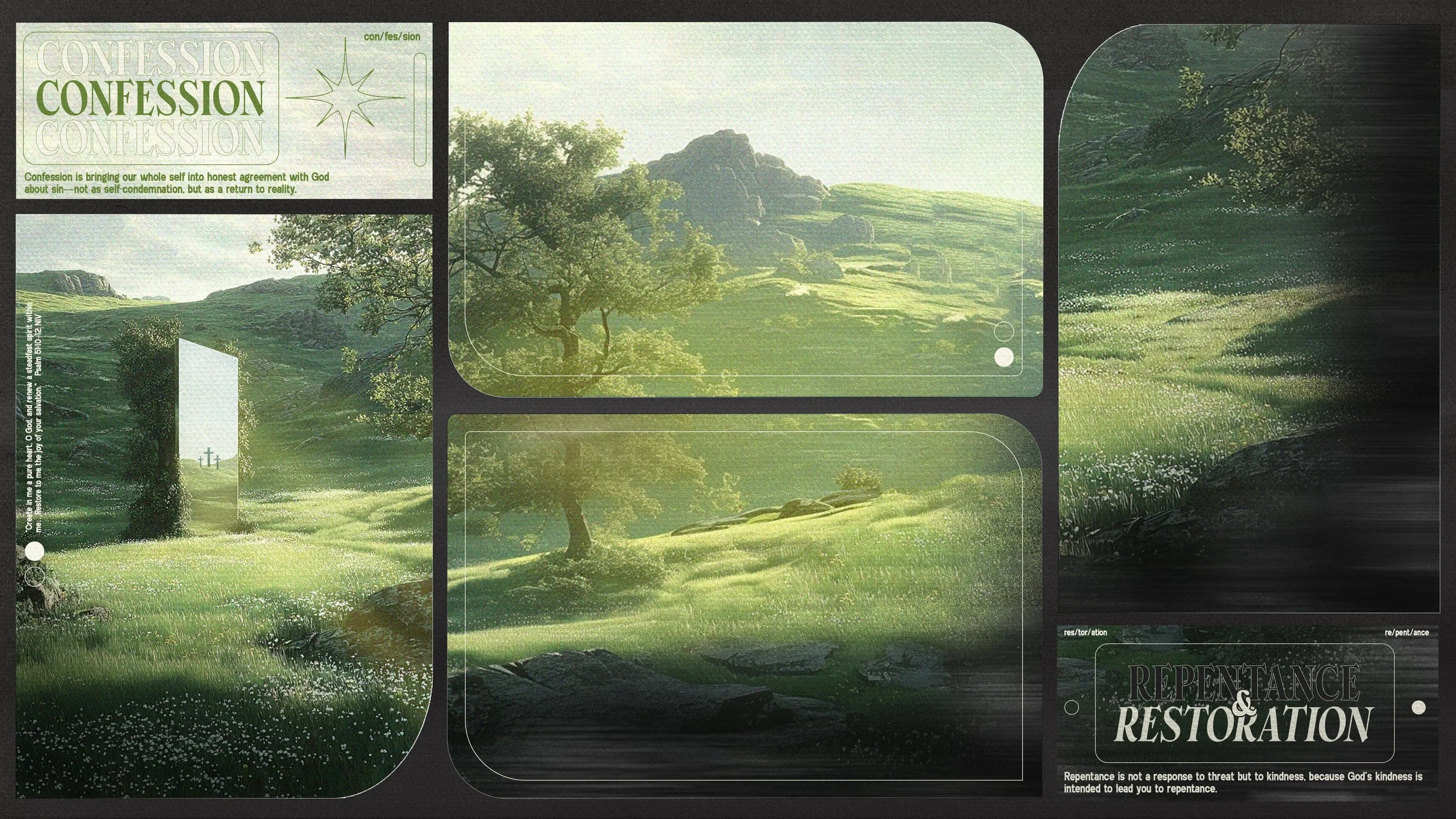
More Than Enough
I don’t know about you, but today’s passage is hard to read. Hard words to say. Hard things to actually ask God to do. My natural tendency is to look past the things I know are wrong in my heart — to gloss over the “offensive ways” and move on. I find it difficult to admit impure motives or uncomfortable thoughts, and honestly, I’d rather skip being tested altogether. I like easy things. I crave being comfortable.
Even Now
Joel is writing to people in crisis. A devastating locust plague has stripped the land bare, and Joel interprets it as a spiritual alarm — a wake-up call to return to God before something worse arrives. But the response God asks for is not what you might expect. He doesn't call for bigger sacrifices or louder prayers. He asks for something much harder: an honest heart
Where Kidness Leads
Though it seems counterintuitive, many of us are terrified to let go of our inner critic. We assume that if we do not bully ourselves, we won’t obey; that if we don’t shame ourselves, we won’t surrender to God’s loving commands. We are afraid that if we show ourselves even an ounce of compassion, we will go on sinning. We often assume that showing ourselves gentleness is the same as giving ourselves a blank check to behave however we please.
Barrier Destroyed
In today’s passage, Paul is writing to the Ephesians about the reconciliation between Jewish and Gentile believers — but the language he uses carries weight far beyond that specific context. The image at the center of this passage is a wall that has been torn down. And what Christ did for divided humanity, He does for every person separated from God by sin.
Let Loose
I want my thoughts and actions to imitate Christ. I really do. And yet, sometimes I find myself off course, and I'm not sure how I got there. Paul's reminder in Romans is that we are sinful by nature — "wretched," as he puts it. That's a hard word to sit with, but there's real freedom on the other side of it. When we look honestly at our hearts, we see that only Christ in us can rescue us from our sinful desires. That change is worth acknowledging and celebrating.
Godly Sorrow
After we confess our sin, God does not want us to stew in shame or wallow in guilt. He does not desire that we be crushed beneath chronic regret or a lingering sense of insufficiency. Confession isn’t meant to cripple our self-esteem or leave us burdened with self-loathing.
The Distance
In today’s passage, Isaiah is writing to a people who are confused about why God feels distant. They're still doing religious things — praying, fasting, observing the rituals. But something is off. The connection isn't there. And Isaiah delivers the diagnosis in a single, direct verse: it's not God who moved.
Staying Silent
Psalm 32 is one of David's "penitential psalms" — a raw record of what it costs to hold something in, and what it feels like when you finally let it go. David isn't writing theory here. He's writing from memory.
Honesty is Harder
Psalm 51 is one of the most raw, personal prayers in all of Scripture. David wrote it in the aftermath of the darkest season of his life — after his affair with Bathsheba, after the murder of Uriah, after Nathan the prophet looked him in the eye and said: "You are the man." This isn't polished religion. This is a soul at the end of itself.
Impulse to Hide
Our sin does its deepest damage when we allow it to dissuade us from drawing near to God. Sin is at its most devastating when we permit it to drive us away from the One Who longs to hold us close.
No Darkness
Nobody enjoys being caught. There's a near-universal human reflex to conceal, minimize, or explain away the things we're least proud of — from small everyday embarrassments to the deeper things we'd never say out loud.
Taking the Mask Off
At first glance, today’s verse might feel like a strange selection for a series about confession. But stay with it. Paul is writing to a community learning how to live differently — and this single sentence carries a blueprint for a transformed heart.
Back to Reality
The apostle John wrote this letter to a community of early believers who were wrestling with a troubling teaching: that some of them had become so spiritually enlightened, sin no longer applied to them. Sound familiar? We might not say it out loud, but there's a version of that lie most of us believe — the one that whispers we're basically fine, and that confession is for people with bigger problems than ours.

If Possible
Here's the freedom in today’s verse: you can't control other people. You can only control yourself. Paul knows this. He's acknowledging that sometimes, no matter how hard you try, peace isn't possible. Sometimes people won't reconcile. Sometimes relationships don't heal. Sometimes you do everything right and things still fall apart.
Take Thought
There's a moment in every conflict where you have to make a choice: Will you retaliate or will you rise above? Someone wrongs you. Someone hurts you. Someone treats you unfairly. And everything in you wants to hit back. To make them feel what you felt. To make sure they don't get away with it. To even the score.
Wiser Than You Are
Pride and presumption suffocate authentic devotion. The moment we assume we have God figured out, our faith begins to calcify. When we claim—explicitly or implicitly—that we fully understand who He is and what He desires, intimacy gives way to complacency.
Humility Connects
Pride isolates. Humility connects. That's the simple truth Paul is getting at here. When you think you're above people—above their struggles, above their needs, above their level—you cut yourself off from the very relationships that sustain devotion. You create distance. You stay on your pedestal, and everyone else stays down there, and nobody actually knows each other.
Live in Harmony
"Live in harmony with one another" doesn't mean you'll never have conflict. It doesn't mean everyone will always agree or that relationships will be easy. It means you commit to working through the mess together instead of bailing when things get hard. Harmony isn't the absence of tension. It's the presence of commitment.
Fragile Devotion
Let's be honest about what this week has revealed: devotion is fragile. It doesn't take much to undermine it. Distraction pulls us away from each other. Self-protection closes us off. Resentment poisons our hearts. Emotional absence leaves us isolated.
Sharing Celebration and Sorrow
We worship a God who not only understands our emotions, but feels them alongside us. Christ does not merely sympathize with us—He empathizes with us. Whatever we feel, Jesus experiences with us. When we are hurting, He cries with us. When we are full of joy, He dances with us.